The boundary between the physical and digital worlds has, in the rapidly-evolving landscape of 2026, almost completely dissolved. Traditional static billboards are no longer the sole giant on the advertising landscape.
Today, they are facing intense competition from Digital Hoarding Advertising. As consumer attention spans shorten and ‘banner blindness’ plagues mobile devices, Digital Out-Of-Home (DOOH) media has emerged as the most resilient and impactful path to build brand equity.
Visual Revolution: Shift From Static to Dynamic
The human eye is biologically programmed to notice motion. A static hoarding, after a few days, becomes part of the ‘background noise’. A digital screen, on the other hand — with shifting colours, high-definition video and animated text — naturally draws a second look. The ability of digital advertising hoardings to deliver movement is what makes them a winner in many ways.
Power of High-definition LED
Modern digital hoarding advertising uses ultra-bright, high-pixel-density LED technology. The screens are designed to be visible even under the harshest of midday Indian sun. This ensures your brand message never fades or washes out. As a result, the ‘always-on’ clarity offers a premium feel that simply cannot be replicated by static vinyl.
Programmatic Flexibility
The real ‘future’ element of this medium lies in programmatic buying. Brands in 2026 no longer have to commit to a single static image for months. Creative can rotate by daypart, city, weather or event — a QSR pushes breakfast until 11 AM and lunch after; a bank localises a branch launch; an FMCG brand reacts to a cricket score in near real-time.
What Makes India a Global Leader in Digital Hoarding Adoption?
The Out-of-Home market in India is currently outperforming global growth rates. The demand for digital advertising hoarding services in India is skyrocketing, with DOOH projected to grow at a CAGR of nearly 14 percent through 2030.
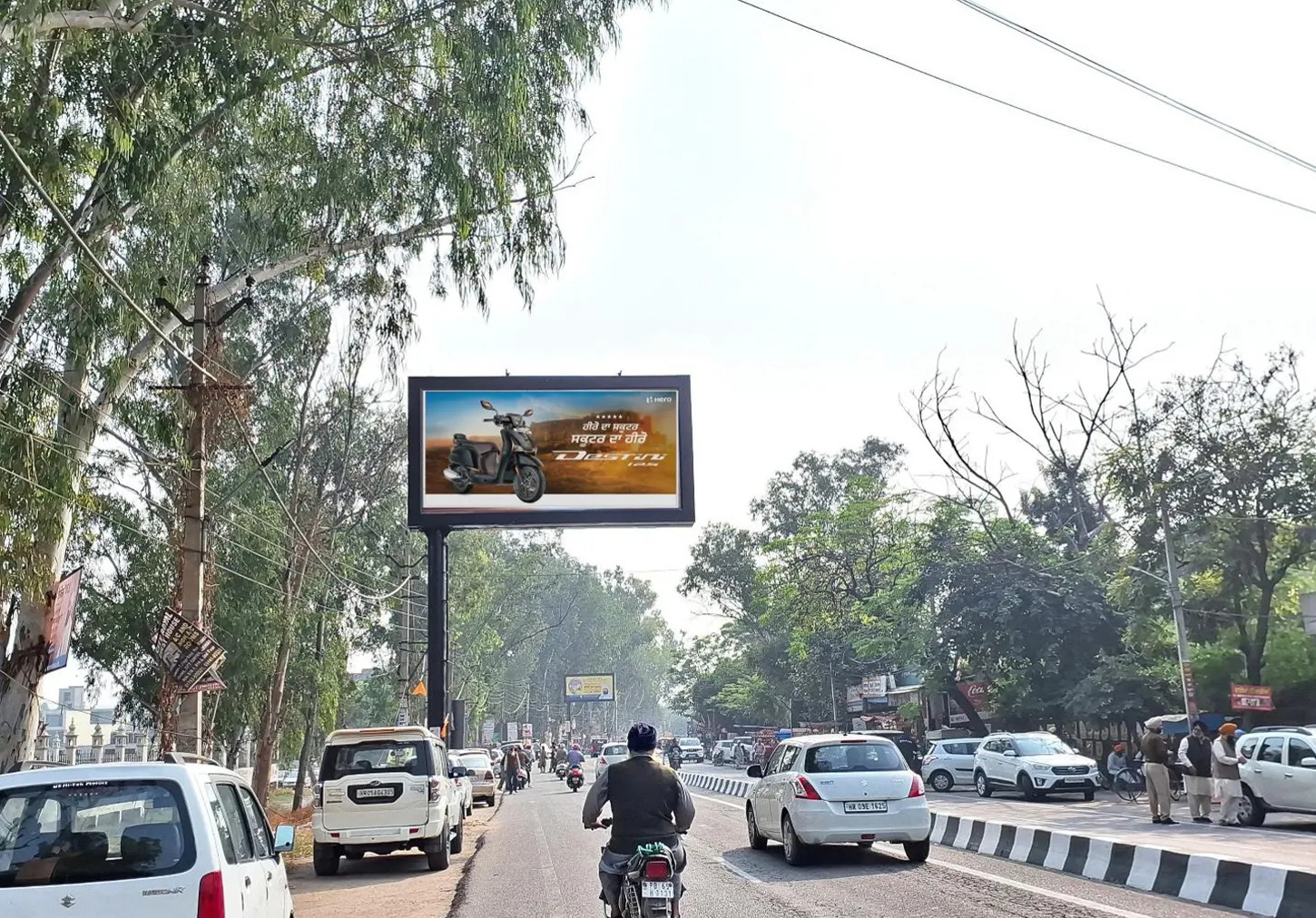
The rapid expansion of metro networks, new international airports and ‘Smart City’ projects has created several thousand premium touch-points. Whether it is a digital pillar in a Delhi Metro station or a massive 100-foot LED on the Gurgaon–Delhi Expressway, the infrastructure is ready for high-tech brand storytelling.
India also has among the highest ‘dwell times’ in the world, thanks to dense urban congestion. Heavy traffic may frustrate commuters, but for advertisers it is a goldmine. A well-positioned digital hoarding at a major junction draws thousands of eyes onto your brand message for minutes at a time — driving recall rates far higher than a split-second scroll on social media.
What Makes It the Future of High-impact Visibility?
Digital marketing on smartphones has reached a point of stagnation. Between ad-blockers, premium ‘no-ad’ subscriptions and the sheer volume of content, breaking through has become increasingly difficult. This is where digital hoarding advertising comes to the rescue — large, unmissable, un-skippable and rooted in the real world.
The ROI Advantage: Beyond the ‘Big Picture’
There is a common misconception that digital hoardings are suitable only for ‘vanity’ or ‘awareness’. In reality, they are powerful drivers of the bottom funnel too — location-based creative near stores, QR calls-to-action, and creative sequencing across a commute all push viewers into consideration and action.
AI-powered cameras and mobile-data correlation are now used by many leading digital hoarding advertising companies in India to offer proof-of-play and impression analytics — closing the loop between spend and outcome.
Choosing the Right Digital Advertising Hoarding Service in India
The initial rental fee for a digital board can be higher than a static board, and the digital OOH space is highly competitive — domestic players compete with global giants for share. Choosing the right partner therefore matters more than ever.
Prominent names in the field, like Jegson Publicity, have set the benchmark for quality and reach in the Indian market — operating flagship sites across Chandigarh, Punjab and Himachal Pradesh with a portfolio that spans premium LED screens, highway hoardings, transit media and petrol-pump networks.
What to Look for in Digital Hoarding Advertising Companies in India?
Look for owned inventory (not just resold), transparent audience data, professional creative support, and a proven track record with brands in your category. A partner who can plan the right mix of static and digital media — and prove impact after the campaign runs — will always out-deliver a pure re-seller.
Creative Strategies for Digital Hoarding Success
To maximise high-impact visibility, your creative must be optimised for the medium: bold single-idea messages, minimal copy, high contrast, motion used with purpose, and dayparted variants so the same site tells a different story at breakfast, lunch and drive-time.
Conclusion
The transition to digital hoarding advertising is not a passing trend — it is a response to how people live in 2026: mobile, urban and visually oriented. By investing in digital advertising hoardings, brands gain the unique ability to be large and local, massive and measurable, at once.
A professional digital advertising hoarding service in India, such as Jegson Publicity, offers startups seeking to make a splash and established giants seeking to maintain dominance the same core promise — tools to translate a simple message into a high-impact experience.
FAQs
1. Is digital hoarding advertising costlier than traditional billboards? Not necessarily. The lack of production and installation costs, combined with the ability to run shorter, more targeted bursts, makes digital hoarding advertising highly cost-effective for brands with dynamic messaging — though the per-second slot rate can be higher.
2. Can I change my ad creative after the campaign starts? Yes. This is one of the biggest advantages of digital outdoor advertising — creatives can be updated in real-time via a centralised Content Management System.
3. How do I know my ad reaches the right audience? Work with reputed digital hoarding advertising companies in India that offer heat maps and traffic data, so you can place your ad where your specific target audience lives and travels.
4. What exactly is digital hoarding advertising? It is the use of large-scale LED or LCD screens placed in high-traffic outdoor areas to display brand messages. Unlike static hoardings, these screens can play videos, animations and multiple rotating ads — a dynamic, eye-catching experience for commuters.
5. What makes digital outdoor advertising ‘the future’ of branding? Three pillars: flexibility, interactivity and data. Brands can launch multi-lingual, time-sensitive campaigns across several cities with just a few clicks.
6. How is a digital advertising hoarding service in India different from traditional OOH? The primary difference is ease of execution and environmental impact. A digital service eliminates physical vinyl printing and manual mounting — a big advantage in a country with diverse regional languages and rapid market changes.
7. Can I track the performance of my digital hoarding campaign? Yes. Unlike traditional advertising, digital hoarding advertising offers improved measurement — from proof-of-play logs to AI-powered impression analytics.